


At the end of World War Two, in 1945, the international institutions underpinning world order and stability lay in almost complete ruins.
The wisest statesmen and women of the era, driven by the horrors of five and a half years of blood-soaked conflict, culminating in the ashes and slaughter of Hiroshima, vowed their commitment to the maxim ‘never again’.
Indeed, they had already begun to think about total reconstruction, even before the end of hostilities.
They believed that without strong world bodies, regaining respect and trust, there would be no peace, no stability, no trade expansion and that democracy itself would be crushed. So, this where their priorities lay. And of course, they were right -the more so with the East-West Cold War looming, which was to last for decades ahead.
They could see that without robust institutions sitting above nation state level, it would be like playing international ‘games’ without rules or rule-keepers, games which would soon descend back into chaos and anarchy, as contests without rules or trusted referees or restraints always do.
On the whole the political leaders and their advisers of the time did a good rebuilding job, with the signing of the UN Charter in San Francisco, (1945) the creation of the IMF and the World Bank, a new trade regulating body, then called GATT and later renamed WTO, the International Court of Justice and numerous other new bodies. And meanwhile Cold War tensions eased with various disarmament negotiations with the Soviets set in train and the groundwork laid for the nuclear non-proliferation treaty (the NPT) -possibly the greatest danger to humanity all.
Later came NATO and the European Economic Community (developing into today’s European Union). In the mid twentieth century these seemed completely logical and sensible steps towards a new, more peaceful and stable order.
After all, since it was Europe tearing itself apart in two world wars, it made sense to seek European unity to prevent a third. And since the USA played a key part in the defeat of Fascism and the upholding of democracy it made equal sense for the Atlantic powers to call themselves ‘The West’ and hold together tightly against dark totalitarian forces.
That was the 20th century ‘settlement’, shaken but not destroyed by Soviet aggression and by the spectacular rise of China, and indeed all Asia, driven largely by the silicon chip and the onset of the digital revolution.
Whether it was ever as simple as that is not so certain. That is a matter for historians to argue over. But what can now be said with absolute certainty is that now, scrolling forward 80 years, almost everything has changed – and changed radically across the entire planet, except in a few remote corners.
With the near costless and total connectivity enabled by the microchip and communications revolution, the relationship of humankind with itself has altered almost beyond comprehension, and certainly beyond the collective minds of many systems of government and social and political organisation, still rooted in the past. Just to put the size of the change not in intellectual and philosophical terms but in bald facts, we are informed that in 1964 Fairchild could squeeze four transistors onto a silicon chip, Taiwan’s most advance chip producer gets 11 billion (yes billion) transistors onto one processor chip.
This is change in speed and connection unparalleled in human history, and of course impacting on a world not of merely hundreds of millions, as in past centuries, but of all but a fraction of humanity’s 8 billion souls today. As a result, almost all the international bodies of the 20th century are in trouble. Admittedly there has been no Third World War – although numerous more local conflicts have raged and are raging now. But time and technology have taken an enormous toll. The mood of middle ground, compromise and diplomatic delicacy between nations has all but gone in an age of instant response and extreme positions. At the court of King Trump it has gone completely.
Meanwhile the UN is blocked by the archaic shape of its Security Council at its heart, with Russia and China, as two of the Permanent Five, able to veto everything.
At the same time, the world financial situation is once again incredibly volatile and very fragile, with levels of many countries’ debt at record levels (and indeed impossible levels, since borrowing more immediately pushes up debt interest and costs more). Almost all disarmament talks have ceased. Nuclear weapons production looks poised to proliferate, despite all the efforts to prevent proliferation.
On the economic side the WTO (world trade body) has been stymied with many trading nations having to construct a new interim body to find a way round the blockages and avoid some of the damage from President Trump’s erratic edicts on tariff rates on US imports from most other countries.
Elsewhere, the rules of both law and of war itself are being flouted daily.
At regional level the same ‘global headwinds’ are blowing. NATO is feeling the draught with the fear that America is about to withdraw support. The consequence is that nations next to Russia (Finland, for one example) are nervously strengthening their border manpower and their border minefields (the opposite of what people once hoped).
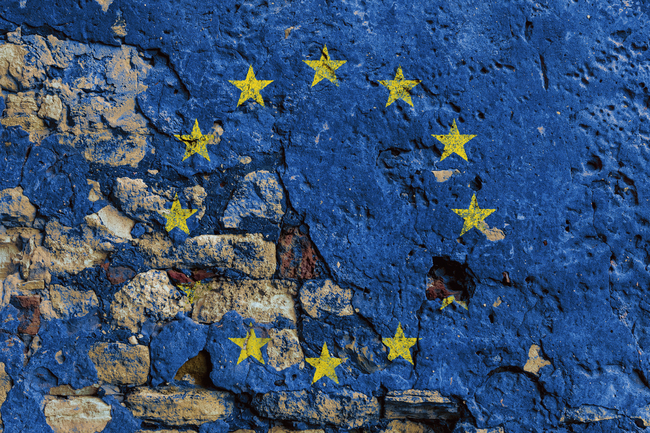
The EU, now minus the UK, is weakened (It is now about 14% of world GNP, while thirty years ago it was 31% or more) but still just about cohering in the fast-changing conditions. A continuing Putin-led aggressive Russia in a way acts on Europe as a sort of cohesive force, even while America cools and argues that Europe should spend more for itself on defence.
In a sense a reformed and less centralised regional European grouping fits into a future in which world trade is going to be fragmented into smaller and more local and specialised blocks. Distance is going to matter less, as ever larger proportions of trade lie in services. There is much idle talk of globalisation of trade being ‘over. But in reality, it is as massive as ever, even if in new forms and garbs!
(Qualifying note; things can change fast forward but they can also go backwards just as fast. At this moment the main middle East trade arteries, like the Red Sea, are partly closed to maritime trade m traffic, because of Houthi terrorist threats – and inevitable worries about getting any ships insured to go through. Similar dangers apply to the key entry point to the Arabian (Persian) Gulf, while the alternative (and much longer) Cape of Good Hope route also has growing dangers.
What can be done to prevent this whole turbulent scene spiralling downwards at every level into chaos and still more violence- not just in one or two countries, not just in a deeply divided America, but in every society?